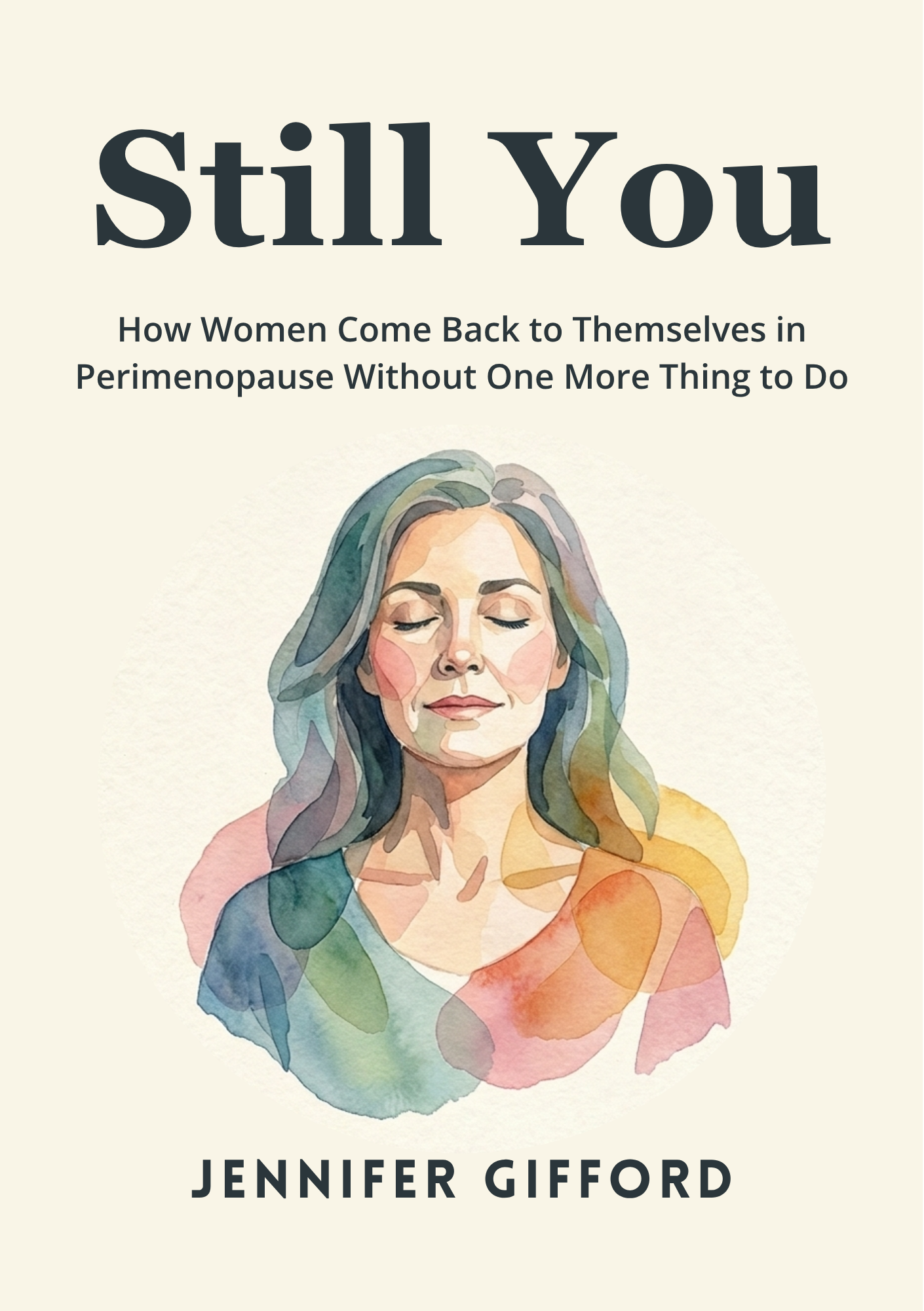
Still You
Perimenopause help for capable women

A perimenopause book for the woman everyone leans on:
feel like yourself again without adding one more routine

You keep the job, the kids, the house and your parents running, so nobody sees how much you're holding. Still You provides five guided steps to count what's on you and put one thing down, so you can feel like yourself again without one more routine to keep up.

Yes! Send me a copy for $20
Ebook only · Instant download

When everything still gets done and you don't feel like yourself

The dentist got booked. Bin night got remembered. Your mother got her call from the car, the kids got where they needed to be, and the work went out at full output like it always does.

Then, perhaps, you sat in your own driveway with the engine off for ten minutes before you could go inside. Nobody knew. You walked in cheerful and made dinner.

The thoughts that come with it are quiet ones. "I just don't feel like myself anymore." "I used to handle everything and now I can't cope with dinner." And the one that rarely gets said in daylight: "What if this is just who I am now?"

Have you ever stood at an open fridge at six o'clock and not been able to turn anything in it into a meal? Or snapped at someone you love over nothing much, then replayed it long after they'd forgotten?

If this sounds familiar, you're not alone, and you're not broken.

Here is what almost nobody points out. The woman this book is written for is carrying more than one body can hold: broken sleep, shifting hormones, kids who need her differently, parents who have started needing her more, the whole household's mental load, and often a decision she hasn't told anyone about. Nobody can see the weight because she keeps delivering. So when the fog and the short fuse arrive, she reads them as news about her character.
Why the snapping and the fog say more about your load than your character

The common belief goes like this: if I'm short-tempered and foggy, something in me has gone wrong, and a more disciplined woman would fix it.

It's an easy belief to hold. You know the reaction was out of proportion. You watched yourself have it. That knowing feels like proof.

Jennifer has a name for this: the Behaviour Verdict. A hard moment gets read as a judgement on who you are, and the case closes before anyone asks what was going on underneath. The trouble with it is where it sends you next. It sends you looking for a fix for yourself, when the thing that needs attention is the pile.

The research gives this some context. Work from Lisa Mosconi's team at Weill Cornell, Jerilynn Prior's research at the University of British Columbia and the long-running Study of Women's Health Across the Nation all describe this stage as a period of real change in the brain and body, with effects on sleep, mood and thinking. Put broken sleep and a full day of managing everyone on top of that, and a short fuse is what you would expect. The short fuse describes the conditions. It says nothing about the person.

Why sleep routines, supplements and new habits stop working on a full plate

Look at the list most women are handed. Screens off at nine. Cleaner eating. A morning routine. A meditation app. A supplement stack, the bottles still half full in the pantry.

None of it is foolish. Much of it has evidence behind it. But every item asks you to add something, and each one becomes one more thing to keep up on top of everything you were already keeping up.

When a routine slips, and on a full plate it will, the conclusion is rarely "this asked too much of a full life." It's "I can't even manage that." The dropped routine goes onto the list of what's wrong with you, next to the fog. The book calls this the One More Thing Trap. You end up carrying the original load, untouched, plus the weight of every fix you started and stopped.

The pile gets heavier. Nothing comes off it.

Why I wrote this book

In March 2020 I stood in the doorway of my workroom and couldn't make myself walk in.

I’d spent more than 22 years in the wedding industry, over fourteen of them running my own bridal gown business. Then Covid arrived, weddings in Australia were cut to five people, and within weeks the fittings stopped and the room went quiet. I’d been feeling trapped by that business for a while. When the work stopped, I chose not to start it again. My father had died the December before. I was trying to help my mother. I was lying awake working out where the money would come from.

I called it burnout, because that's the word you're given. It didn't fit.

The fog and the short fuse had been creeping in for months. One afternoon I needed to tell my daughter the jam doughnuts were in the fridge. What came out was "I put the round things in the cold place in the kitchen." We laughed. Then she left the room and I stood there a moment longer than I needed to.

My daughters copped moods that had nothing to do with them. So did my mother, while she was grieving too. And quietly, I assumed I was becoming a worse person.

So I did what I knew how to do. I added. Supplements, routines, more effort. When I started helping other women, my first programme was a fourteen-day reset with a workbook. I asked friends to test it. Not one of them finished. They had to print it, find the time, find the file again. I'd made the exact trap I was trying to get women out of. The change came when I swapped one question for another. I stopped asking what is wrong with me and started asking what is on me.

Why putting one thing down works when adding routines stopped working

When you write the whole pile on one page and take a single thing off it, the fog and the short fuse stop reading as who you are, and the relief can come quickly because there's nothing new to keep up.

The book explains why. Your mind keeps a ledger of everything unfinished, and it doesn't rank them. The dentist and the decision about your marriage sit in the same queue, each one quietly asking to be checked. Your body keeps a second ledger of everything spent. Most capable women are running a quiet deficit on both.

The heaviest open loop is usually the decision nobody has heard. Saying it aloud to one person doesn't make the decision. Nothing has to change. It simply stops costing you every single day.

The Lighten First Plan

The five-step approach at the centre of Still You. It takes weight off instead of adding tasks, it sits beside your doctor, and it leaves every big decision in your hands.

01
Count What You're Carrying
Write the whole pile on one page, nothing sorted and nothing solved, so the fog and the short fuse start to read as arithmetic.
02
Name Your State
One word each morning and evening (wired, flat or swinging) so you recognise a state before the day decides what kind of person you are.
03
Put One Thing Down
Drop a single obligation, or say the unsaid decision aloud to one person, and leave it gone long enough to feel the difference.
04
Park the Big Call
Write anything permanent down, date it and put it somewhere physical until you're sleeping and feel like yourself.
05
Decide When You're Back
Make the choice rested, then keep it only if it still stands a week on.
Claim your copy of Still You for $20
Start with the first step tonight · Instant download

What happened when one woman wrote it all on one page

There’s a woman I know well. She isn’t a client, and I’ll call her M. When I suggested she write the pile down, she said what nearly everyone says: “I know what’s on me.”

She did. She could have recited it. But reciting it, you hold one item at a time, and each one on its own looks manageable. She’d never seen it in one place.

She wrote it. She sat with the page for a long moment. Then she said, “No wonder.”

Something shifted in her face. The short fuse and the flatness had stopped being a verdict on who she was. She hadn’t taken a single thing off the pile yet. She’d only seen it, and that was enough to move from.

What You'll Discover Inside

01
How to tell a hard moment from a verdict on who you are
You'll discover the Behaviour Verdict, the habit of filing one bad afternoon as proof about your character, and how to stop it closing the case.
02
The three states to name before the day decides who you are
Wired, flat and swinging, what each one looks like from the inside, and why naming one at seven in the morning changes how you read the snap at dinner.
03
Why every fix you've tried added weight instead of easing it
The One More Thing Trap explained plainly, along with what the usual advice gets right and where it goes wrong.
04
How to write the whole pile on one page in ten minutes
Including the parts most women leave off: the body, the tracking nobody sees, and the losses that never announced themselves as grief.
05
How to find the smallest thing you can stop doing without anyone noticing
Why the heaviest line on your page is the wrong place to start, and what to choose instead.
06
Why an unsaid decision drains you every day
The two ledgers your mind and body keep, and why saying it to one person stops the cost without forcing you to act.
07
How to tell real clarity from urgency
Why a depleted body can mistake the urge to get out for an answer finally arriving.
08
How to park a big decision without pretending it isn't there
Four lines on a piece of paper that let your mind stop checking at 3am.
09
The week-on test for knowing whether a choice is truly yours
Three questions, answered rested and again seven days later.
10
The quiet mistakes that undo the plan
Skipping the count, picking the weight back up, and turning the method into one more project.

Is This Right For You?

This is NOT for those who:
  • Want a supplement stack, a 30-day plan or a better morning routine. The ask in this book may frustrate you.
  • Want to get more efficient so they can keep holding the whole pile. The pile is the point.
  • Are waiting for someone else to make their decision for them. This book helps you get steady enough to make it yourself.
  • Have already decided this is just who they are now and want it confirmed.
This is for:
  • The woman others come to and rarely ask.
  • The woman who still delivers, and on paper is fine.
  • The woman who knows exactly who she used to be and would like that woman back without being handed another programme to keep up.
Claim your copy of Still You today for $20
Do the count tonight · Instant download

Frequently Asked Questions

Is this just another perimenopause self-help book?
Most books in this space ask you to add something. This one asks you to take one thing off. You can read it in one sitting, two at most. There's nothing to print, download or keep up once you close it. Where a chapter asks you to write, it asks for one page and a pen.
Does this replace my doctor or medical treatment?
No. Still You sits beside your doctor and beside any treatment they recommend, including HRT, never instead of either. Jennifer is not a doctor and the book doesn't advise on medication. It's clear about where it stops, and it says plainly when to see your GP first.
How quickly will I notice a difference?
Often soon after putting one thing down, because weight came off rather than a task going on. There's nothing to build up to. Your judgement coming back takes a little longer, and the book explains why.
I'm still functioning. Is this really for me?
Still functioning is exactly why nobody has counted the load, including you. The book is written for the woman who keeps delivering.
My bloods came back normal. What then?
Hormones swing in this stage and one test can miss it, so keep the conversation going with your doctor. And look at the load, because no blood test will show you that.
What if I'd rather not do the count alone?
The back of the book explains a free conversation with Jennifer where you count the pile together. It's there if you want it, never required.
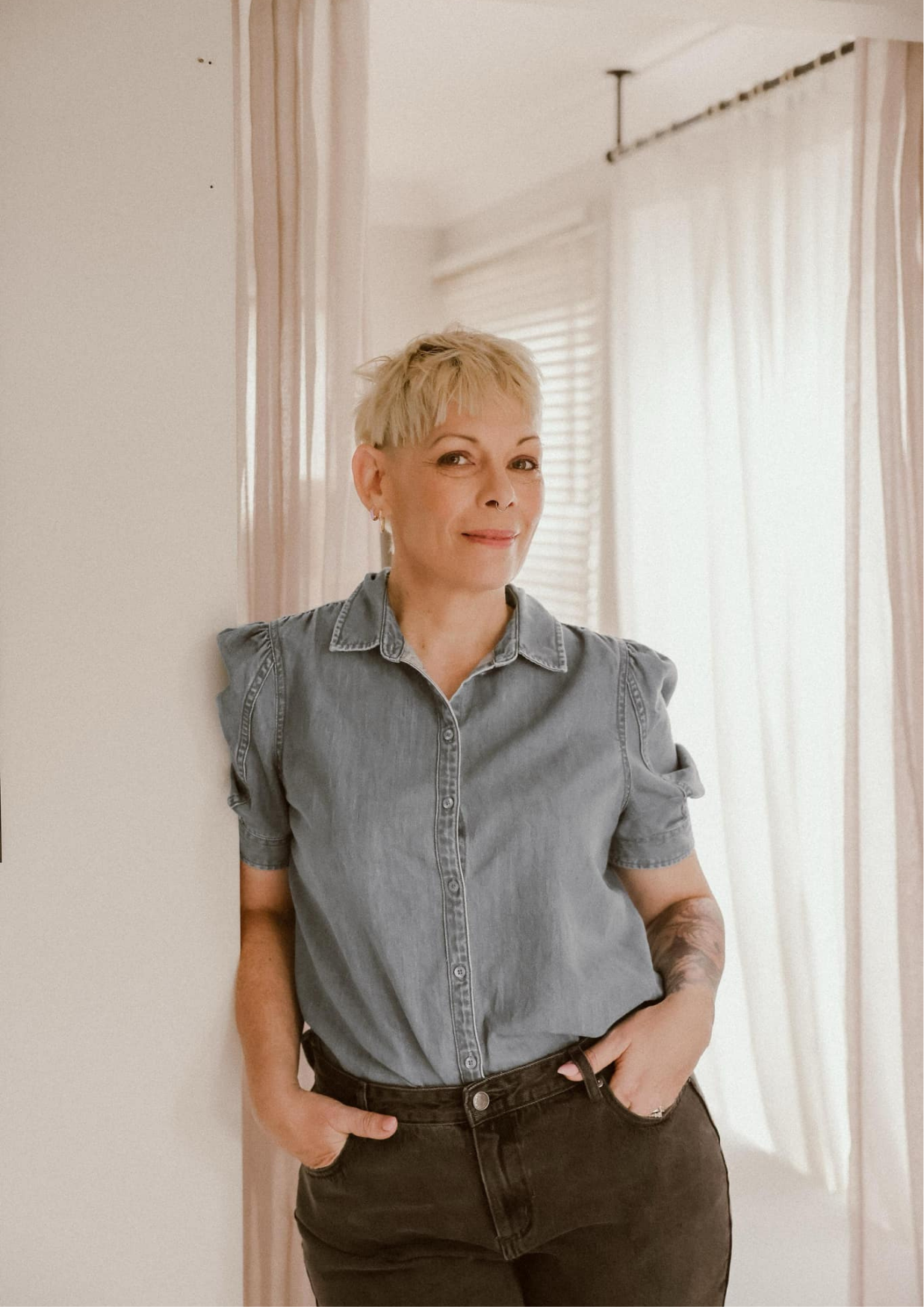
Jennifer Gifford

Jennifer Gifford.

Jennifer Gifford is a coach and writer who helps high-functioning women in midlife and perimenopause get steady before they decide anything irreversible. She runs The Threshold Studio in Brisbane.

Before that, she spent more than 22 years in the wedding industry, over fourteen of them running her own bridal gown business, working beside women at a threshold with pins in her mouth while they worked out who they were about to become. When Covid stopped weddings in 2020, she chose to wind down a business she had outgrown, while grieving her father and helping her mother, who lives next door. For a long time, she treated the weight as a character flaw.

Still You is what she wishes someone had handed her in that doorway. 

Start Tonight

Feel like yourself again,
with one thing
off the pile

Same kids, same parents, same job. The whole pile on one page, one thing gone, and the big decision waiting until you’re steadier. Claim your copy and start with one page and a pen tonight.

Yes! Send me a copy for $20
30-day refund · Ebook only · Instant download